jueves, 12 de noviembre de 2015

domingo, 18 de octubre de 2015
Penzu Reflection
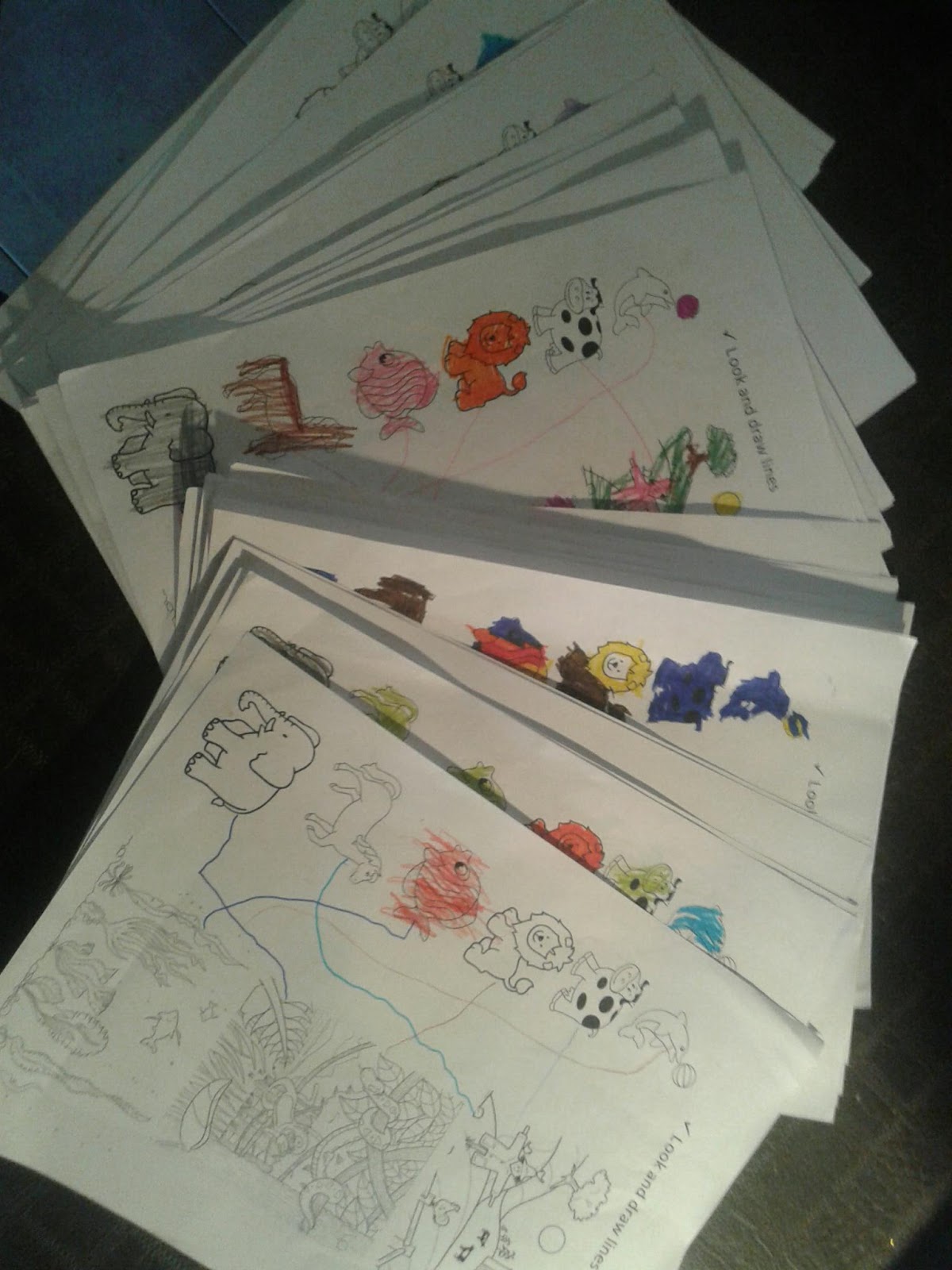
I enjoy all the classes at Santo Tomás School. However, I think that the class that I enjoy most was the last one. At that class, I realized not only how much I learned about young learners, but also how fruitful was this experience. My partner, Gala Tamagni, and I organized every class with love and dedication as if we were the teachers in charge. We made our best to teach our little students in ways that match their learning styles. We learned by heart all their names, all their songs as well as all their routines in order to make them feel secure in our classes. Children acquire best through play, so we prepared enjoyable games and activities, so as to practice the target language all the time. In addition, we made little presents for them in order to thank not only the headmistress and the teacher, but also our little students. All our efforts were reflected in that last class! :)
One of the greatest challenges that we have to face was the unexpected things. Usually, the children got easily distracted since they really loved chatting, so when some of the groups started to talk with each other, most of students lost their attention, in consequence, in some occasions, we had to stop the class and told the students to pay attention to their teacher. In order to avoid this problem, we had to maintain them entertained and motivated with the class, making them all participate in the activities. In this way, when we planned our classes, therefore, we needed to bear in mind the need for qualities such as flexibility and variety. Generally, the little students behaved in an excellent way, but some days, they behaved so badly that we had to find all the ways to control them. Sometimes, we asked them to change places and sit somewhere else. Other times, we identified the uncooperative pupil that caused distraction and we asked him to be “today’s helper”. In addition, we tried to create an English environment all the time, making English the classroom language as well as the language to be learnt. Speaking English for the majority of the time, together with the material we created, listening and videos, we tried to constantly expose the children to how English sounds and what it feels like.
To sum up, I can say that this experience was one of the best experiences of my life. I learned so much about everything. This adventure help myself to know that teaching is what I want to do! :)
I enjoy all the classes at Santo Tomás School. However, I think that the class that I enjoy most was the last one. At that class, I realized not only how much I learned about young learners, but also how fruitful was this experience. My partner, Gala Tamagni, and I organized every class with love and dedication as if we were the teachers in charge. We made our best to teach our little students in ways that match their learning styles. We learned by heart all their names, all their songs as well as all their routines in order to make them feel secure in our classes. Children acquire best through play, so we prepared enjoyable games and activities, so as to practice the target language all the time. In addition, we made little presents for them in order to thank not only the headmistress and the teacher, but also our little students. All our efforts were reflected in that last class! :)
One of the greatest challenges that we have to face was the unexpected things. Usually, the children got easily distracted since they really loved chatting, so when some of the groups started to talk with each other, most of students lost their attention, in consequence, in some occasions, we had to stop the class and told the students to pay attention to their teacher. In order to avoid this problem, we had to maintain them entertained and motivated with the class, making them all participate in the activities. In this way, when we planned our classes, therefore, we needed to bear in mind the need for qualities such as flexibility and variety. Generally, the little students behaved in an excellent way, but some days, they behaved so badly that we had to find all the ways to control them. Sometimes, we asked them to change places and sit somewhere else. Other times, we identified the uncooperative pupil that caused distraction and we asked him to be “today’s helper”. In addition, we tried to create an English environment all the time, making English the classroom language as well as the language to be learnt. Speaking English for the majority of the time, together with the material we created, listening and videos, we tried to constantly expose the children to how English sounds and what it feels like.
To sum up, I can say that this experience was one of the best experiences of my life. I learned so much about everything. This adventure help myself to know that teaching is what I want to do! :)
jueves, 10 de septiembre de 2015




jueves, 20 de agosto de 2015


jueves, 25 de junio de 2015
Penzu: First Observation!
Penzu: First Observation
https://penzu.com/p/982ba310
Cielo Sampietro
https://penzu.com/p/982ba310
Nombre del establecimiento: Colegio Santa Tomás
Curso y año del observada: Salita verde – 5 años
Tema de la clase observada: School Objects – Shapes- Winter
Los niños entran al aula después de saludar la bandera en el patio, a las 13.25pm y al entrar a su salita verde, según lo que se pudo observar la mayoría de las veces, los alumnos, se sientan en forma de círculo en el piso en el rincón derecho de su aula con Miss Caro en el medio de ellos. En el aula hay 5 bancos grandes y de forma circular con 5 o 6 sillas más o menos cada uno, la profesora elige quien se sienta en cada mesa y con quien, teniendo en cuenta la actividad que se va a desarrollar en el día. En las paredes de la salita se pudo observar una gran cantidad de láminas pegadas tanto de números como de letras, actividades y dibujos realizados por los chicos, banderines de todos los colores. En la esquina derecha, se encuentra una pequeña biblioteca de libros para niños. También se pudo notar bastantes estanterías en donde las seños colocan cajas de lápices, tanto negros como de colores, gomas y además los libros de la bibliografía utilizada por los alumnos, los cuales son un Cambridge starter y algún que otro peluche por ahí. En cuanto a los sonidos predominantes, se podría decir que lo que más se puede escuchar es el sonido de los autos ya que el aula está ubicada muy cerca de la vereda, cuando no se escucha a los niños cantar en inglés, ya que eso les encanta.
Como ya fue mencionado, los chicos entran a la escuela a las 13.15pm, y lo primero que hacen es saludar a la bandera (en castellano) y dicen una oración (en inglés), esto toma más o menos unos 10 minutos y luego cada grupo se va a su sala. Al entrar al aula lo primero que hacen los alumnos es sentarse en circulo y Miss Caro comienza a cantar canciones sobre “weather”, “days of the week”, “if they are happy or sad” y luego vuelven a rezar pero esta vez son dos oraciones en inglés y apartir de esto podría decirse que es que más tiempo lleva. Luego de todo esto, la seño elige uno de los varones y una de las niñas para que cuenten cuantos varones y cuantas niñas son las presentes en ese día, en el caso de alguno este ausente, Miss Caro pregunta a los chicos si saben que le paso o si está enfermo. Luego de terminar estas rutinas, se comienza con el tema que está previsto para la clase. La hora de inglés termina a las 14.30pm, y según lo observado, podría decirse que se horario escolar se cumple bastante bien o por lo menos no hemos tenido ningún inconveniente por el cual no se haya podido cumplir el horario o algo por el estilo.
En este año y en esta salita, la cual se denomina verde, lo que se utiliza como material o bibliografía es el libro “Kids Box Starter” de Cambridge. Lo que se pudo notar es que no utilizan un cuaderno, ya que todas las clases son orales, a no ser que la seño les de alguna actividad del libro (el cual tampoco se utiliza demasiado) o algún dibujo con vocabulario que estén trabajando en el que ellos tengan que decorar con cosas como algodón, yerba, etc, o solo pintar. En la parte izquierda del aula, se pudo observar la existencia de dos pizarrones, pero estos no se utilizan ya que en ellos hay pegados láminas de números, letras, colores, etc. En el aula no hay computadoras.
Miss Caro, en cuanto a la motivación, utiliza mucho el recurso de las “flashcards”, ya que pudimos notar que en varias ocasiones utilizo varias de ellas, todas diferentes y de acuerdo al vocabulario que se está viendo ese día, por ejemplo vocabulario de invierno, de figuras geométricas, objetos utilizados en la escuela, animales, etc. También pudimos notar que utiliza juegos, tanto para mantener a los niños motivados, como para que estos se familiaricen con palabras en inglés, como por ejemplo el juego del “memotest” , o adivinanzas con rimas en que ellos tienen que adivinar de que se está hablando, y hasta adivinanzas con descripciones de animales ( color size, number of legs, etc) para que ellos adivinen de cual se trata. Con respecto a las rutinas, los chicos cantan al entrar al aula y al salir de esta, les encantan las canciones, así que Miss Caro casi siempre les trae una canción nueva para que ellos aprendan.
El grupo de alumnos está constituido por 31 chicos, más nenas que varones. Hasta el día de la fecha, pudimos notar, que no asisten todos los días los 31 alumnos, si no que más o menos 26 o 27 son los que asisten regularmente. La relación entre ellos es bastante buena ya que no hemos presenciado ninguna pelea en que alguno salga lastimado o nada por el estilo, son bastantes revoltosos y les encanta charlar, pero nada fuera de lo común para ser niños. Tampoco hemos notado alguno que no se integre, si alguno que otro que se dispersa, perola mayoría de ellos disfruta mucho de la clase inglés. Con respecto a la relación entre niños y niños podría decirse que es bastante buena, generalmente los varones se sientan con los varones y las niñas con las niñas, pero como ya fue mencionado anteriormente no hemos presenciado ninguna pelea fuera de lo común entre ellos. También podría agregarse que estamos bastante sorprendidas por el nivel de inglés que los niños tienen ya que saben decir estructurales gramaticales como por ejemplo el verbo to be “yes, it is”, “yes, we are” o el uso del can para pedir permiso “Can I go?”, sin mencionar el vocabulario de colores, números y animales el cual lo saben muy bien.
Como conclusión podría decirse que la impresión que tuvimos es que el grupo es muy lindo y que nos gustaría trabajar junto con ellos ya que solo hemos observado las clases hasta el momento. Son niños que se nota que les encanta aprender inglés y que a pesar de su edad lo manejan muy bien y además que disfrutan de las clases de Miss Caro, y por eso es que estamos muy contentas por el grupo y la salita que nos tocó.
Cielo Sampietro
Puppets: Peter and the Fox Script
Practice paper : Puppets
Subject: English.
Students: from 8 to 12
Time: class around 60 minutes, play between 10 and 15 minutes.
Participants: Tamagni Gala, Cielo Sampietro, Cavalotto Andrea and Haag Sofia.
Story: “Peter and the fox”.
Resources needed: puppets, “scenario”, computer (music), loudspeakers and script.
Purposes:
Our aim is to teach through a story based methodology, new vocabulary as well as go over previous vocabulary learnt by the students through the use of puppets. By vocabulary we mean for example: colours, numbers, objects in general for example if the setting is the woods, the elements, there such as trees, animals, nature of it is a town vocabulary related to what it may be presented there) physical features, a wide variety of adjectives and elements that exist in different surroundings.
This tool (puppets) is not only useful to keep them motivated and entertained but also to make the children associate the vocabulary with characters and images; and at the same time as a story will be narrated and the characters will be talking, the students will be able to understand and learn more words and structures related to everyday speech and even associations with the past.
The play will also involve preliminary activities (before the play) in order to revise previous knowledge and introduce the topic, vocabulary and characters; direct interaction between the students and the puppets and even the use of body language. We want them to feel motivated, excited and also inspired; interaction with puppets will engage their curiosity and participation, it is a valuable resource to make them acquire new vocabulary and to go over previous knowledge.
Most of their senses will be “active”, they will see, hear and even touch and play with the puppets, their increased cognitive abilities will make this process of learning even more possible.
Also, after the play, we aim to give the students homework (with clear instructions) related to puppets and the topic in order to consolidate what they have learnt. For example,
Also we do not only want to teach everything we have mentioned before without taking into account the message of the story. We did not choose it only because we consider it rich and fun for teaching but also because of the moral it reflects, the idea of honesty and helping others. Transmitting values to our students is essential in order to build up their democratic citizenship!
Objectives:
Students will be able to:
· Revise and integrate previous knowledge.
· Learn new vocabulary/lexicon identifying it with images provided through the play
· Pronounce correctly new words
· Make use of their body through TPR activities
· Activate or make use of their representational systems: visual, auditory, kinaesthetic.
· Motivate and engage their curiosity through the play
Activities Previous to the play:
In order revise previous knowledge and introduce the topic (vocabulary and characters) we will ask the students a few general questions such as: “Children do know what this is? (showing them a sheep) What colour is it? Do you know where sheep live? What do they eat?
Script: “Peter and the fox”
Once upon a time, there was a little Shepherd who lived in atown near the woods. His name was Peter and his job was to take care of the sheep.
· During this introduction we will present Peter and the sheep in the scene. After this we will stop telling the tale and introduce them to the students, directly asking them trough Peter if they know what a shepherd is, what is he like, what is he wearing, what many sheep are there, the colour and characteristics, etc.
He was always bored and alone on the field; he used to play alone trying to find out how to entertain himself. Finally he had anidea to have fun.
_ Peter: “This will be so funny, it is just a joke”
So one day, Peter started to shout:
_ Peter: “Help, help! The fox is coming!”
The alarmed neighbours ran out to help him:
_Neighbours:” Run, run, Peter is in danger. Hurry up!”
But they just found Peter laughing
_ Peter: “Ha, ha, ha, you are so silly, I was joking!”
The neighbours went back home really angry and disappointed.
· During this scene we will present 4 characters/puppets based on the neighbours and reproduce recorded sounds such as people angrily murmuring.
On the next day, Peter decided to make the same joke.
_Peter: “Help, help! the fox is coming again, please help me he is going to eat me and my sheep!”
This time, some of the neighbours didn’t pay him attention, but the others who really believed Peter was in danger, ran out again to help him.
_ Neighbours: “Hurry up, maybe he really is in danger this time”
But it was a bad joke again, Peter couldn’t stop laughing and the good neighbours just decided to ignore him.
_ Peter: “Hahahaha you are so silly”
_ Neighbours: “This was the last time, we will never believe him again. He is a liar!”
The day after, Peter the Little Shepherd was with the flock when a big fox appeared.
_ Wolf: I am the fox, I live in the woods and I am really hungry. Do you see any sheep I can eat?”
When the wolf saw Peter’s sheep he started to eat them. Peter could not believe it and started to shout again.
_ Peter: “Help, help! A big grey fox is eating my sheep!”
But no one in town ran out to help him. So the big grey fox ate allthe sheep. Peter felt really sad and alone. From that day on he never lied again and started to look for a job considering that he didn’t have any sheep left.
_ Peter: “I will never lie again, it is not funny and people do not trust me anymore, they were very kind and tried to help me. I can have fun and be honest without hurting people’s feeling”. THE END
Activities after the play:
We will let the students interact and play with the puppets as well as give them some homework: explain step by step how to make at home finger puppets based on animals that live in Argentina
 Another choice can be to ask the students to bring for next class any material they have at home to prepare the finger puppets in class; also we (teachers) will bring the materials.
lunes, 8 de junio de 2015

viernes, 15 de mayo de 2015

Songs for YLE


Practice paper 3:
Subject:
English
Students:
6-7
Time:
class around 60 minutes
Topic:
Parts of the Body
Participants:
Cielo Sampietro, Cavalotto Andres, Haag Sofia, Rainhart Jesica, Tamagni Gala
Song:
Head, shoulders, knees and toes: www.youtube.com/watch?v=YBJ_-MyV2rU
Purposes:
Our purpose is to teach the
vocabulary regarding parts of the body. Not only to make the students identify
the meaning of the words but also to recognize every part on their own bodies
through a song and activities that involve body language, pictures and games.
We attempt to engage their curiosity and provoke participation in order to
teach according to the student’s specific needs and skills. As they are
children we expect to take advantage of their increased cognitive abilities at
that age in order to teach new vocabulary.
Objectives:
Students will be able
to:
- Identify parts of the body, name and pronounce
using English.
- Make use of body enactment through TPR activities
to remember and activate the new lexis learnt.
- Engage in singing a song in order to make English
enjoyable.
- Play games in English to review, practise new
lexis and structures learnt.
Activities:
·
First (and during the whole class) we will use our
flashcards to introduce the tasks, they will be short, clear to the point and
associated with icons. Firstly the children will be ask to watch the video and
of course hear the song “Head, shoulders, knees and toes”. We believe this is a
really useful tool as the video presents the vocabulary (lyrics) while a boy
sings the song and marks every part of his body. This will be a great source to
present them the vocabulary for the first time, with explicit references,
repetition and motivation to sing and dance.
·
After the have seen the video once, we will provide
them with the written lyrics but uncompleted. So, the video will be played a
second time and stopped and discussed after every line in order to make the
students complete the missing lines (most of them are key words presented on
the video). We will check the words on the board so as no one misses the
corrections, and they will be able to copy all the words.
·
It is important to say that we will be using all the
time repetition and eye contact as well as nominate the students to achieve a
fruitful rapport. After the presentation on the lyrics we will stick on the
board a human silhouette named Simon, and next to it some body parts (mouth, eyes,
ears), some students will have to come to the front, stick the correct body
part on a suitable place and say it loud on the microphone (and the whole class
too), at the same time we will be writing on the board the name for every part.
·
After introducing Simon and working with the
vocabulary, we will use TPR by playing the song again and repeating it. By
repeating it, we do not only mean to sing it but to make every student stand up
and practice the choreography :).
·
Then, the children will be
ask (through the flashcards) to draw the missing parts on a mini silhouette provided to each one of them,
write their names and colour them; this will sustain their motivation. We want
to activate their senses, cognitive skills by motivating them with different
activities that will keep the children focused and interested in order to achieve
our aim as teachers, to make our students learn. So is crucial for young
learners to be provided with activities that change throughout the class and
with a balanced timing, they shouldn’t take too long or too little time.
·
Finally, we will make a review and finish the class by
using TPR again, this time not a song but a game: Simon says. This will not be entirely
new for the children, as Simon had been introduced before. We will ask them to
form a big circle, explain the aim of the game and enjoy it together.
RESOURCES NEEDED:
- Worksheets, photocopies,
beamer, computer, loudspeakers, microphone, video on youtube or the file,
flashcards, Simon’s silhouette and tape.


Suscribirse a:
Entradas (Atom)